Brief
A Kickstarter campaign often stands or falls by how the product is sold. Without a good video, it’s hard for backers to picture what they’re paying for. The assignment: find a campaign that has no promo video yet, and make one for it as its motion designer.
The video had to be 30 to 60 seconds, 1920 × 1080 at 25 fps, with sound the whole way through and no copyrighted music. We worked in milestones: a pitch deck, an animatic and the final render.
Process
Finding the product
The hardest part was the start. I wanted a product that gave me a lot of freedom: not a mechanical tool or a decoration, but something with a clear function I could show off, and a design simple enough that I could play with it. I spent about three hours going through different categories, and with every product I was already picturing funny scenes for it. Nothing was eye-catching enough until I found the Bugstick, a stick that catches spiders so you can put them outside without hurting them.
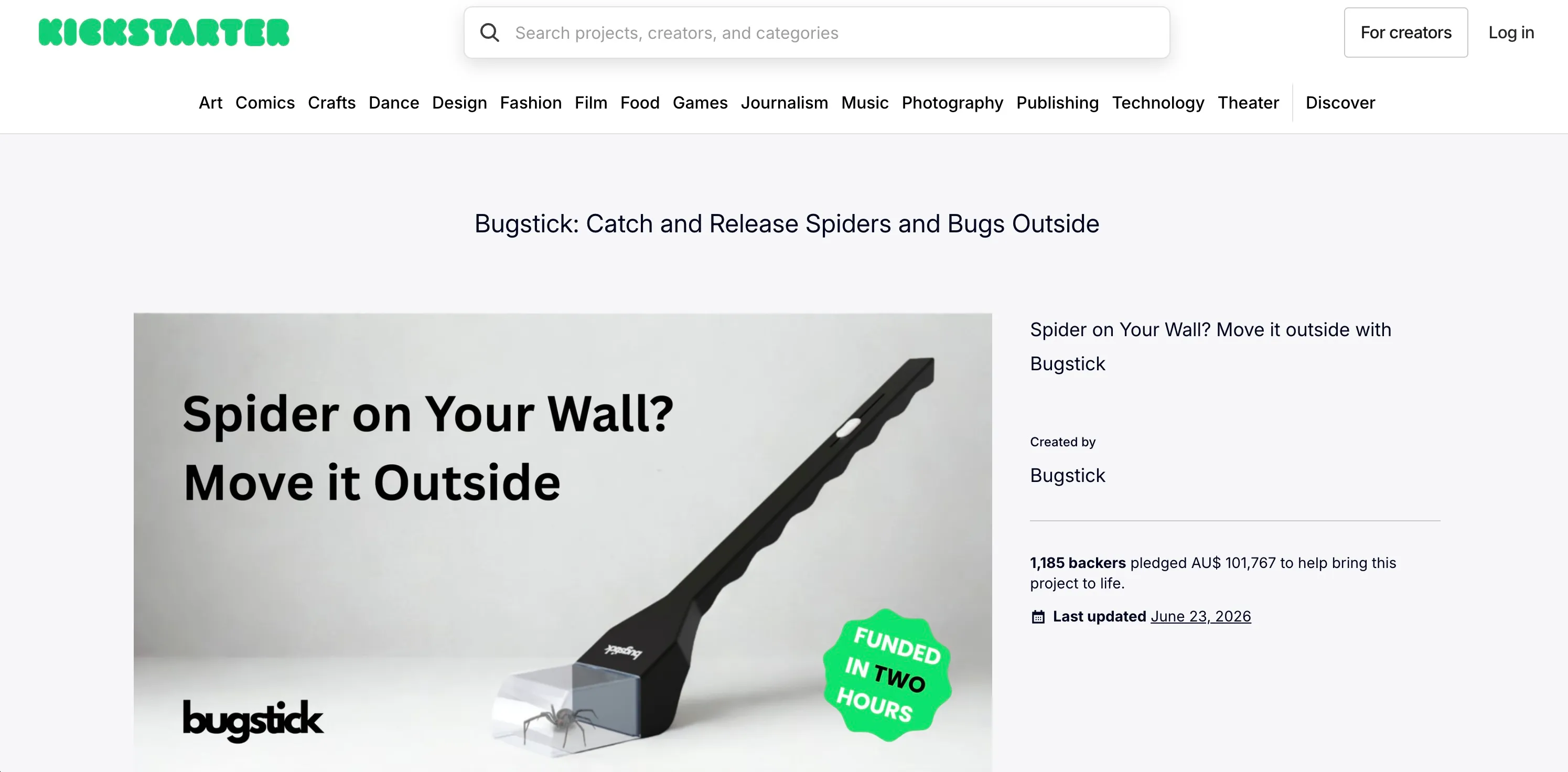
The real Bugstick campaign on Kickstarter.
I had scenes in my head for it before I’d even started the storyboard.
The pitch deck
For the pitch deck we had to present our product with a storyboard, a style board and a style frame: one frame showing how the finished video would look.
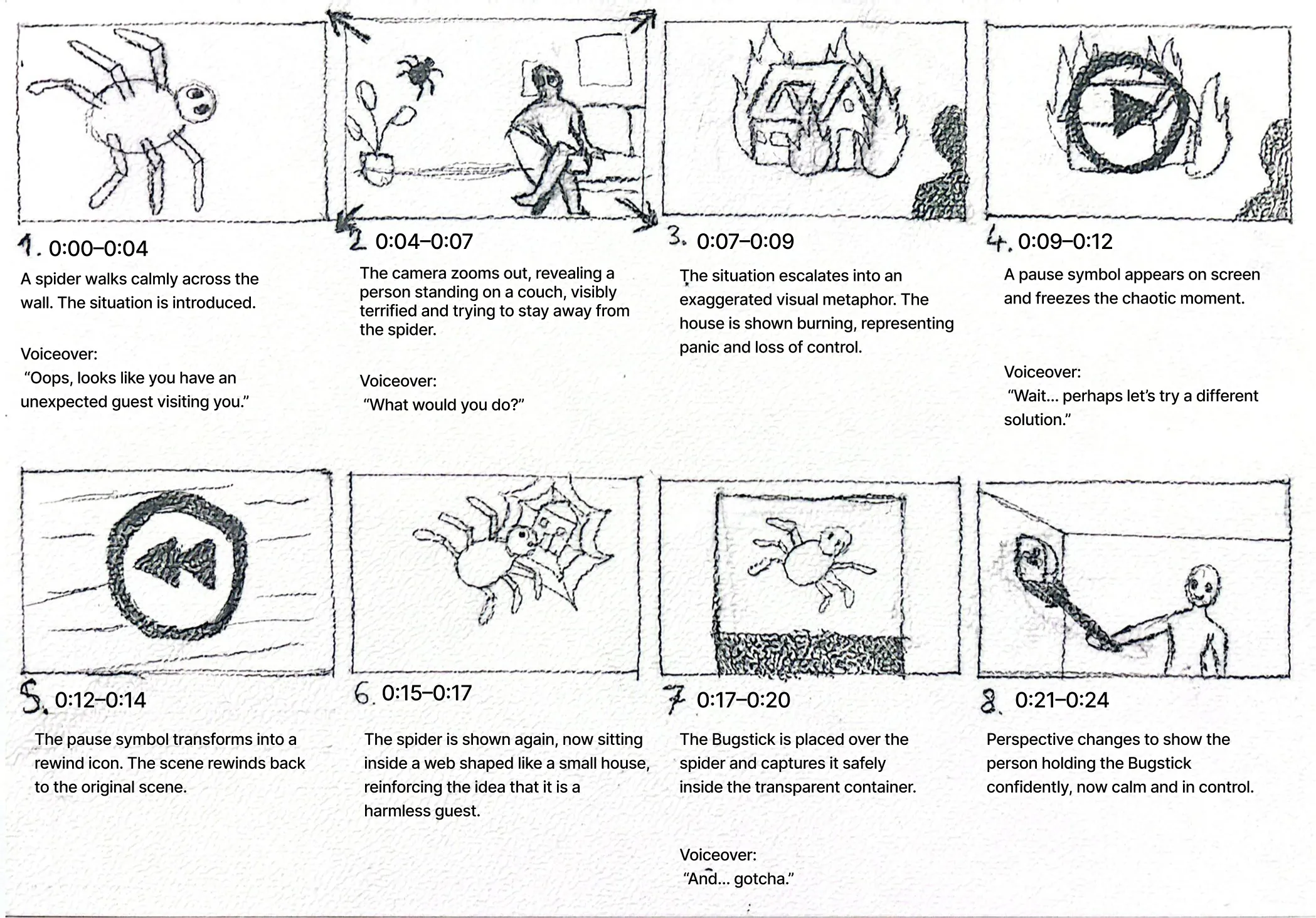
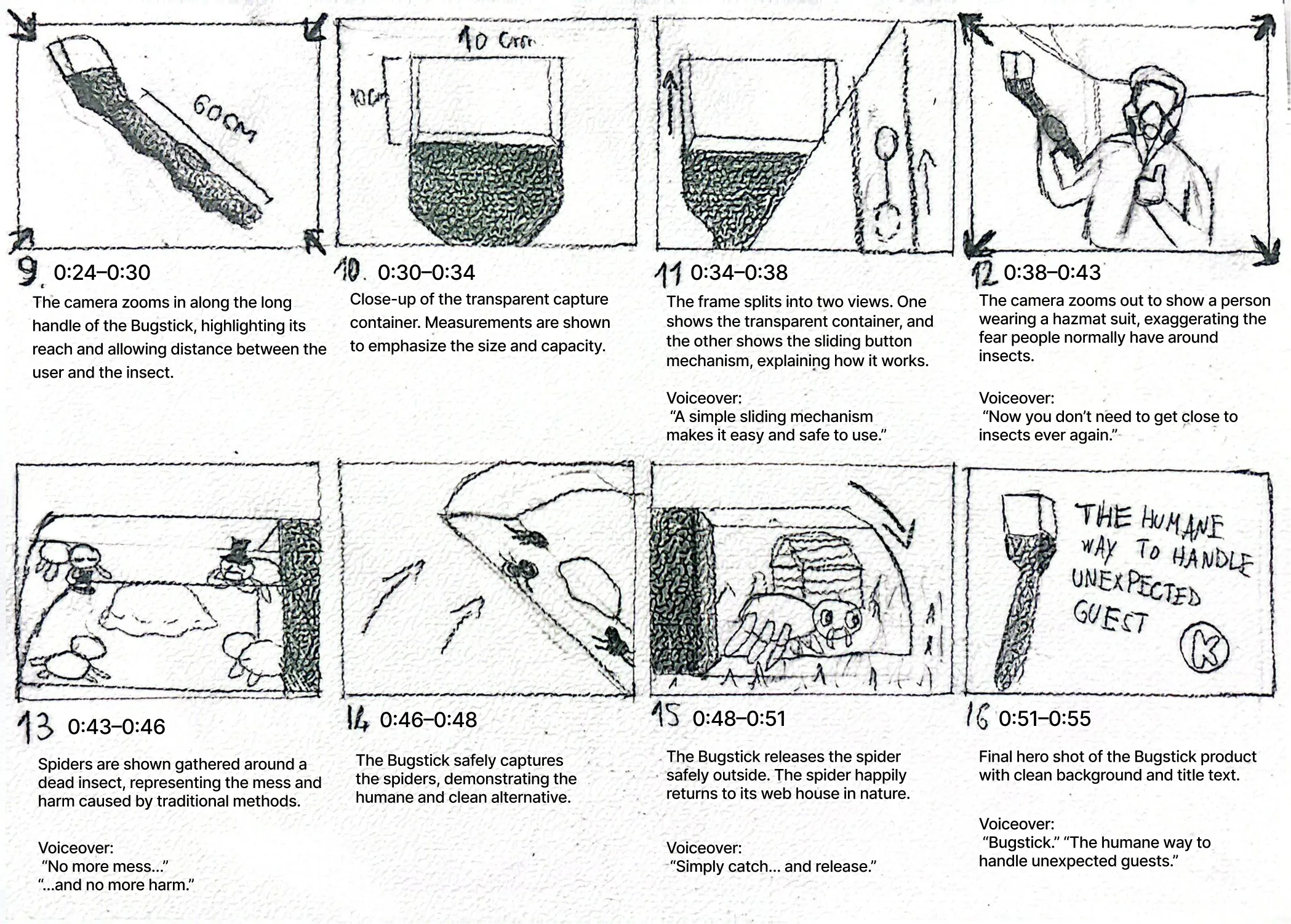
The original storyboard: 16 panels, 55 seconds on paper.
On paper the story was 55 seconds, but I’d been playing the scenes far too fast in my head, and my teacher confirmed it. The feedback was that the story was fun, so the idea wasn’t the problem: I just had to cut scenes until it fit. The hazmat suit, the spiders around a dead insect and catching several spiders at once didn’t make it into the final video.
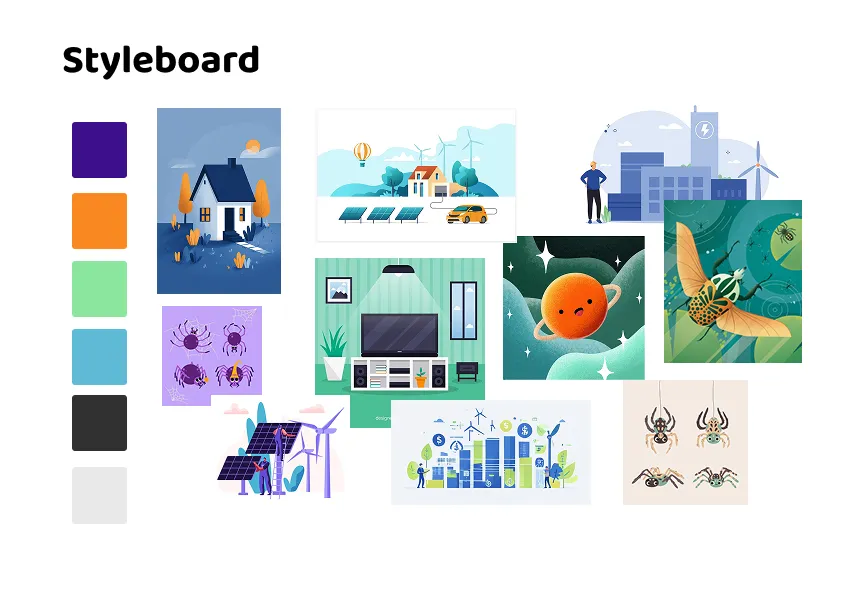
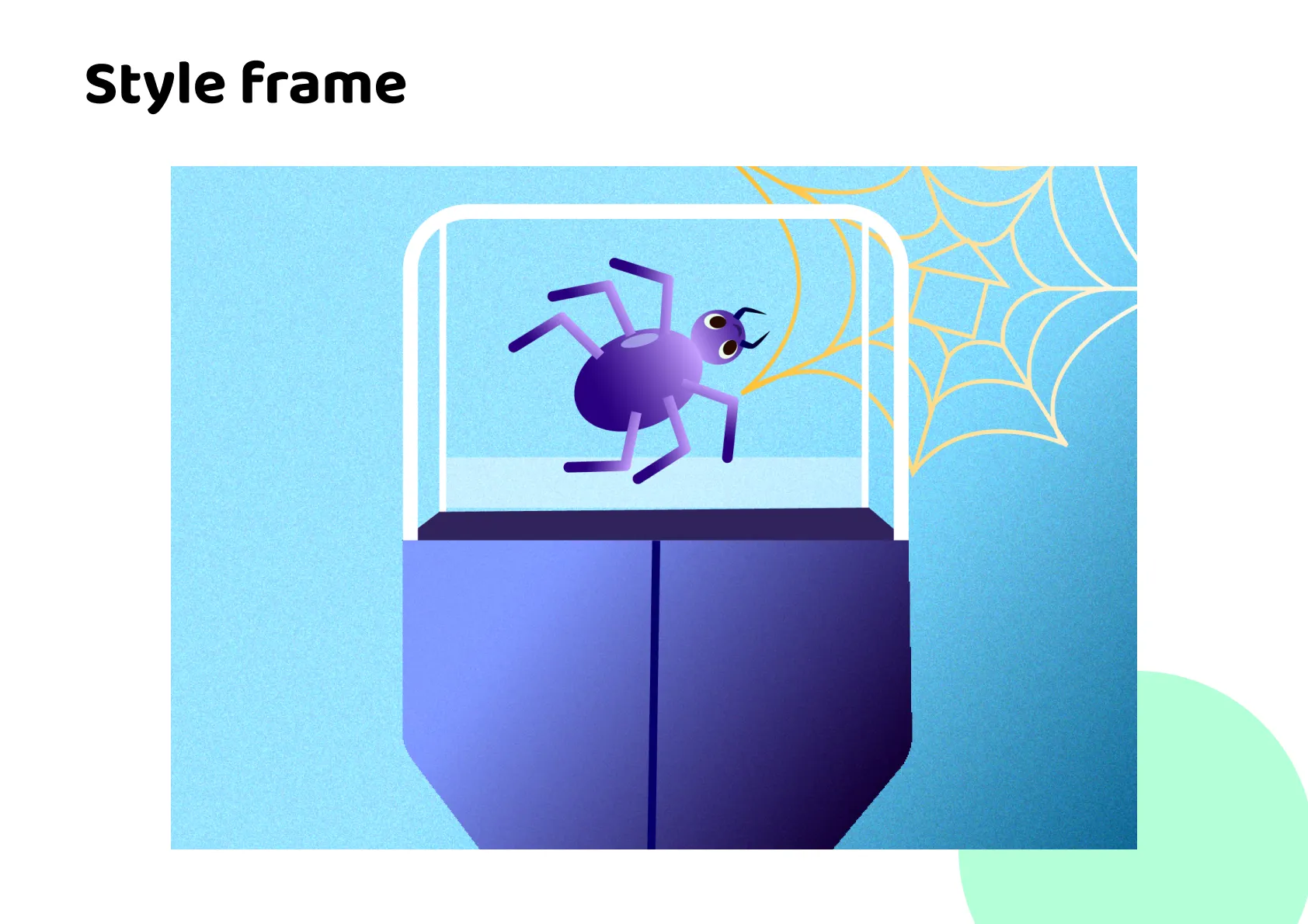
Style board and style frame from the pitch deck, before the style changed.
Animatic
Next was the animatic, to work out the timing.
The animatic.
Most of the feedback was about pacing: some scenes dragged on too long and others were over too fast.
Finding the style
At this point I wasn’t happy with my design, and I struggled with it for a while. After a talk with my teacher and a lot of Pinterest, I broke through and landed on a simple style that works: flat shapes, two main colours and thin black lines for the details.
Building it
I designed every frame in Illustrator, then brought them into After Effects so I’d have full freedom to animate, and built the final scenes there.
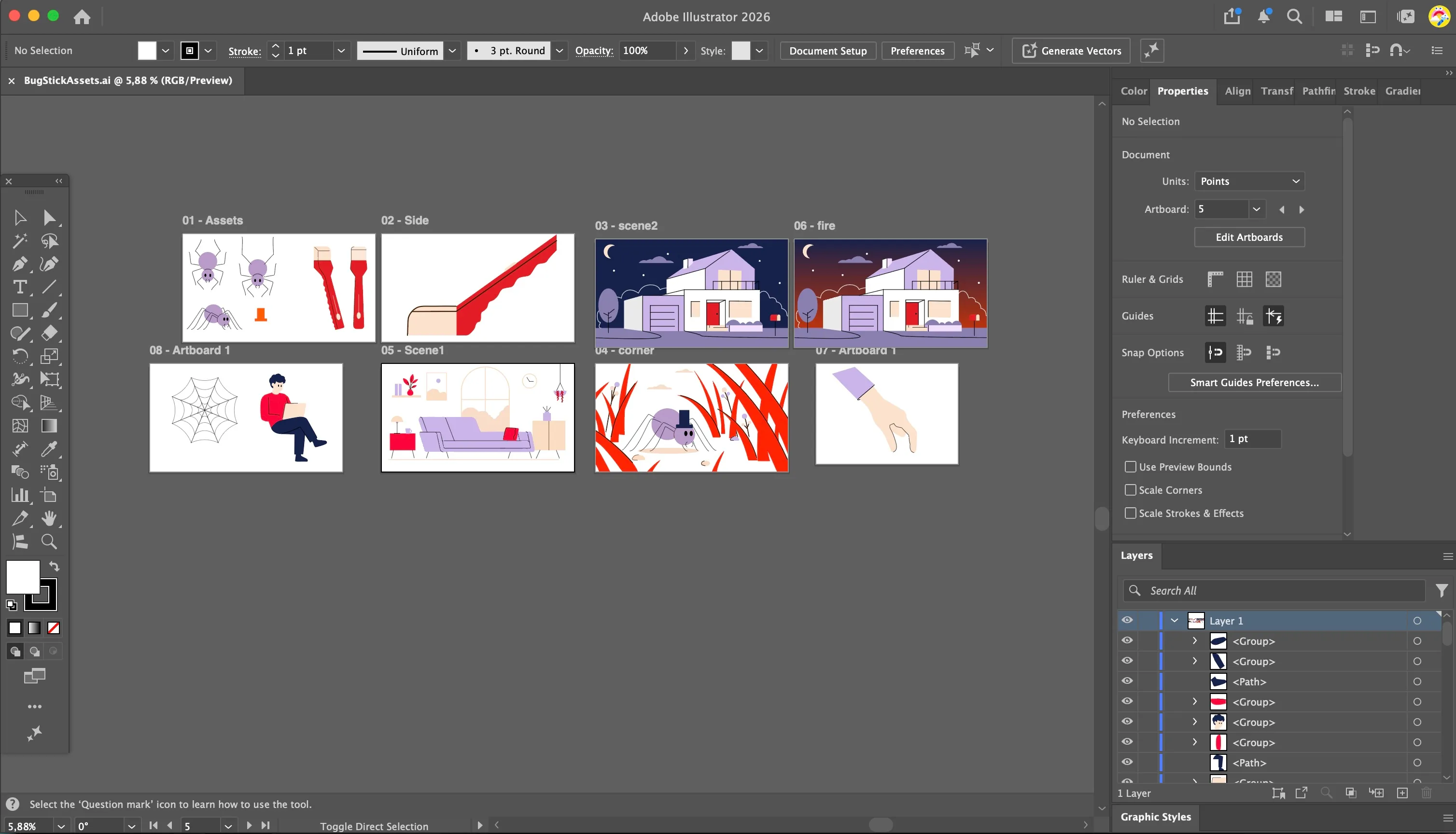
All the scenes and assets as artboards in Illustrator.
The voice-over is an AI voice I made in ElevenLabs, and finding one that matched the project took me a long time, much longer than I expected. The music is from Epidemic Sound, so it’s cleared for use.
Result
The final ad, 56 seconds. Sound on.
This was one of my favourite assignments to work on, and it’s the kind of work I want to do more of.